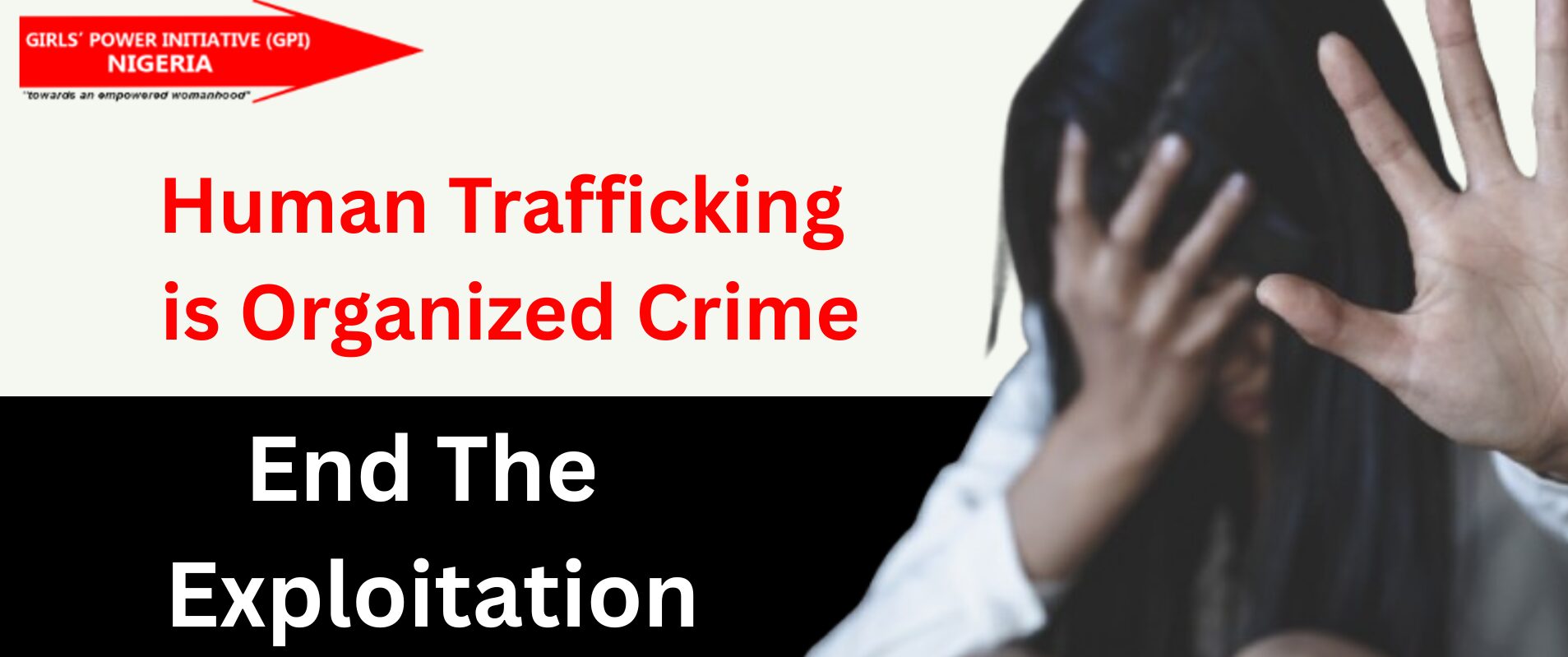
World Day Against Trafficking in Persons: GPI pushes for stronger action to end exploitation of girls and young women
Benin City — As the global community observes the World Day Against Trafficking in Persons, the Girls’ Power Initiative (GPI), Nigeria has reaffirmed its dedication to eradicating all forms of human trafficking, with a special focus on protecting girls and young women from exploitation.
In a statement issued on Wednesday, GPI joined global and national stakeholders in commemorating this year’s day with the theme, “Human Trafficking is Organised Crime – End the Exploitation,” which draws attention to the highly structured and systematic operations that fuel human trafficking networks.
“For over 30 years, GPI has been at the frontline, educating and empowering girls to recognise and resist the deceptive tactics used by traffickers,” said May Ikoghode Ekido, Coordinator of GPI’s Edo State Center. “Trafficking is not random; it is strategic, deliberate, and must be met with equally coordinated resistance.”
According to the statement, GPI has continued to deploy multifaceted interventions to combat trafficking, particularly in high-risk regions like Edo and Delta States. In 2025 alone, the organisation empowered over 180 out-of-school adolescent girls and young women across Edo and Delta states with vocational and business training, mentorship, and access to starter grants. These efforts, the statement notes, are designed to tackle root causes such as poverty, misinformation, and limited opportunities.
GPI also highlighted the establishment of Community Anti-Child Trafficking Watch Groups, which now operate in several local government areas of Edo and Delta States. These coalitions, made up of religious leaders, teachers, transport workers, youth advocates, and security agencies, function as frontline defenders, tracking, reporting, and responding to trafficking threats within their communities.
In partnership with bodies like the Edo Migration Agency, the National Agency for the Prohibition of Trafficking in Persons (NAPTIP) and other civil society organisations, GPI has worked to amplify its reach through community mobilisation, policy advocacy, and digital awareness campaigns.
The organisation is also pushing for the integration of trafficking education into school curriculums and is leveraging digital platforms to spread accurate information and counter traffickers’ recruitment strategies.
As part of its call to action, GPI urged for greater collaboration among government agencies, civil society, and local actors to dismantle trafficking syndicates; increased investment in education and economic empowerment, particularly for at-risk populations; expanded use of digital tools and community monitoring to identify and disrupt trafficking routes; and comprehensive support systems for survivors, including trauma care, legal aid, and reintegration services.
“Every girl child deserves the right to live without fear, to dream freely, and to pursue her potential in safety and dignity,” Ekido emphasised. “Let us commit, together, to ending this organised exploitation.”
“GPI will continue to champion the rights of girls and young women as well as collaborate with all stakeholders to end trafficking in Nigeria and beyond.”